Eating at St. Anselm: A Très Brooklyn Steakhouse
By Ian MacAllen on Friday, December 19th, 2025 at 3:24 pm
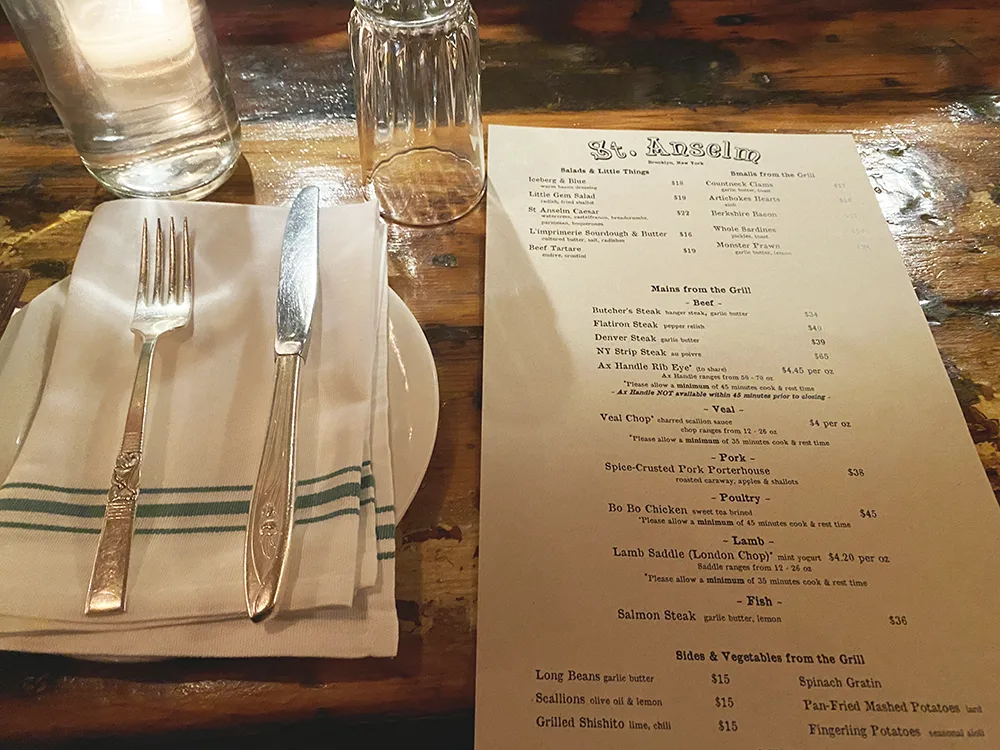
The corner of Havemeyer and Metropolitan Avenue in Williamsburg, Brooklyn has been at the epicenter of millennial gentrification for the last quarter century. St. Anselm sits at the center of the block, and while other stalwarts of the last decade have closed, it continues to serve up high quality food in a style and setting the modern steakhouse pioneered.
St. Anselm opened in 2011 as an Brooklynized, updated version of a New York steakhouse. A year earlier, the first concept for St. Anselm had opened and closed. The original iteration served up New Jersey-inspired fried hot dogs and sliders.
That early model of upscale fast food and snacks wasn’t sustainable, and St. Anselm closed and reinvented itself while awaiting a liquor license. The shift is an interesting revelation into how Carroll sees his role. He told Monica Burton at Eater in 2018 that a concept and a space must be in harmony with each other, and forcing one on the other doesn’t work.
When St. Anselm reopened, it hosted a more refined menu. It drew inspiration from the city’s old guard restaurants, but also created something new, fresh, and distinctively Brooklyn. It was a steakhouse for the hipster crowd.
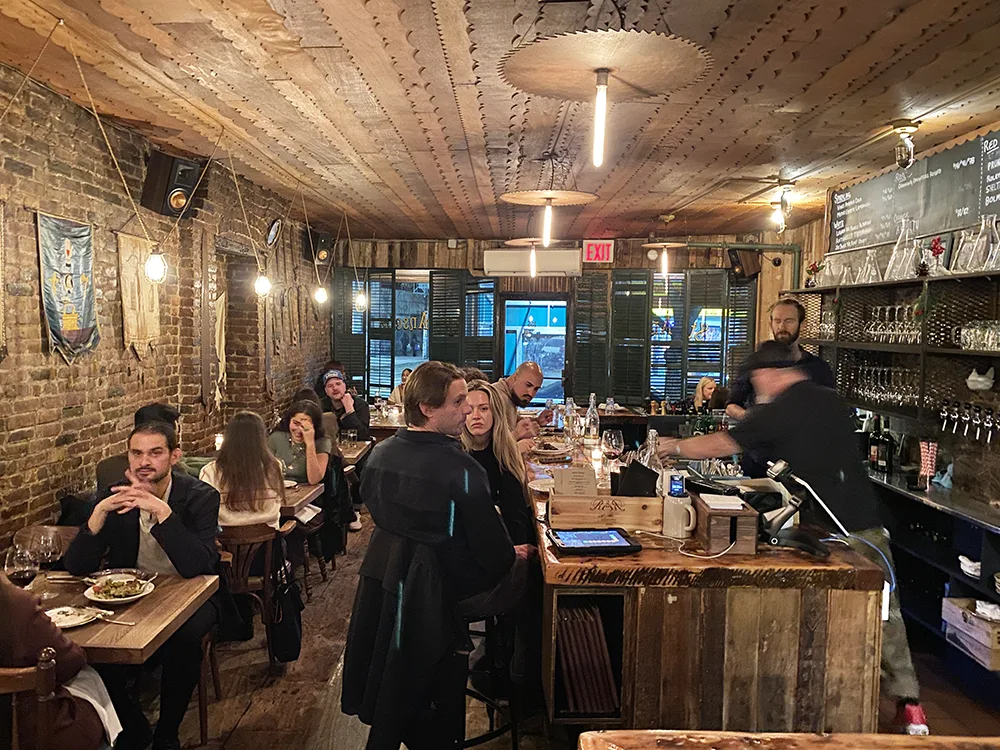
St. Anselm was the third project from Joe Carroll, who had first opened the beer bar Spuyten Duyvil in the adjacent building, and then Fette Sau in a garage across the street. St. Anselm, the steakhouse, has a kind of maturity, more refined, and more upscale. It was steak, served alongside exposed brick and steam pipes wrapped up in rope. The aesthetic defined many of Brooklyn’s trendy restaurants in the aughts and early teens. In St. Anselm, Carroll was eschewing the casual setting of his first two restaurants.
Sam Sifton of the New York Times as described it as “most of all, a Williamsburg restaurant, with all that this entails, down to the smart-aleck mix of rock music (not too loud) on the stereo.”
Though Sifton seems more concerned with the aesthetics, and the “no substitutions” rules, St. Anselm is part of a larger shift in the way we eat, and what we expect from restaurants. New York’s steakhouse traditions are about gatekeeping, and impressing clients with big tabs and formal table service. St. Anselm is the opposite of that, more affordable, more focused on good food than superficialities like white linen tablecloths.
In many ways, St. Anselm is actually less revolutionary than Spuyten Duyvil or Fette Sau. Craft beer bars and beer culture generally were not something that existed in 2003 when Spuyten Duyvil opened. Sure, now any Irish pub in midtown has some kind of “craft” beer available, but that wasn’t true two decades ago. And when Fette Sau opened in 2007, there was no barbecue in New York City. These were revolutions.
With St. Anselm, it was more evolution than revolution. It helped define a newer, more refined “new American” cuisine and experience, but drew on existing trends that already existed. That’s not to downplay the significant role St. Anselm has played, either in the neighborhood or in restaurant culture more generally — the tropes and cooking styles embraced and pioneered by St. Anselm are common now beyond Brooklyn — but they weren’t alone. On other hand, St. Anselm remains.
Meanwhile, Fette Sau is set to close this weekend. Spuyten Duyvil closed last year. But St. Anselm, despite a brief hiatus last year because of a fire, now has a second location in Washington, D.C., and, according to Aaron Short at Grub Street, owner Joe Carroll is working on opening a third location in Nashville by 2027.
The Williamsburg that existed when St. Anselm first opened is rapidly disappearing. Havemeyer Street, once the eastern fringe of hipster Williamsburg, has become a destination for trendy, upscale restaurants. Commercial rents are up. Residential rents are astronomical. A new generation of kids are churning through the neighborhood.
***
My wife and I returned to St. Anselm earlier this month for dinner to celebrate our seventh wedding anniversary. Back in 2013, we had our first date on a lazy Sunday afternoon. We met at Spuyten Duyvil and sat at the bar expecting to have a drink or two and little else. She told me later her expectations were equally low.
But some seven hours later we were still on our date, still drinking, and then ravenously hungry. The city was a real place back then, so even though it was ten p.m. on a Sunday night, we had more than a few options for dinner. She was eventually headed to the G, so we walked over to Brooklyn Star for dinner.
So many years later, we landed chef’s counter reservations for 9:45 p.m. on a Sunday evening. We arrived a few minutes early, and when the table wasn’t ready, headed next door to Rude Mouth, the wine bar that had replaced Spuyten Duyvil. It seemed fortuitous, at least until the bartender at Rude mouth explained she had already made last call. Does anyone remember when bars were open late?
Instead we grabbed a drink next door at Bar Madonna, a new Italian American inspired bar that replaced an unremarkable taco shop. We had a quick glass of wine and then headed back to our reservation.
The restaurant feels intimate, which is to say, small. The counter overlooking the grill provides a bit of a show, and we watched every cut of meat hit the flames and observed the staff plating each dish.
We wanted to start with the St Anselm Caesar. Caesar salads have caught my attention as of late because they all seem to be increasingly simply a pile of parmesan cheese reminiscent of a hairy dog. Alas, they were sold out and we ended up with the Little Gem Salad.
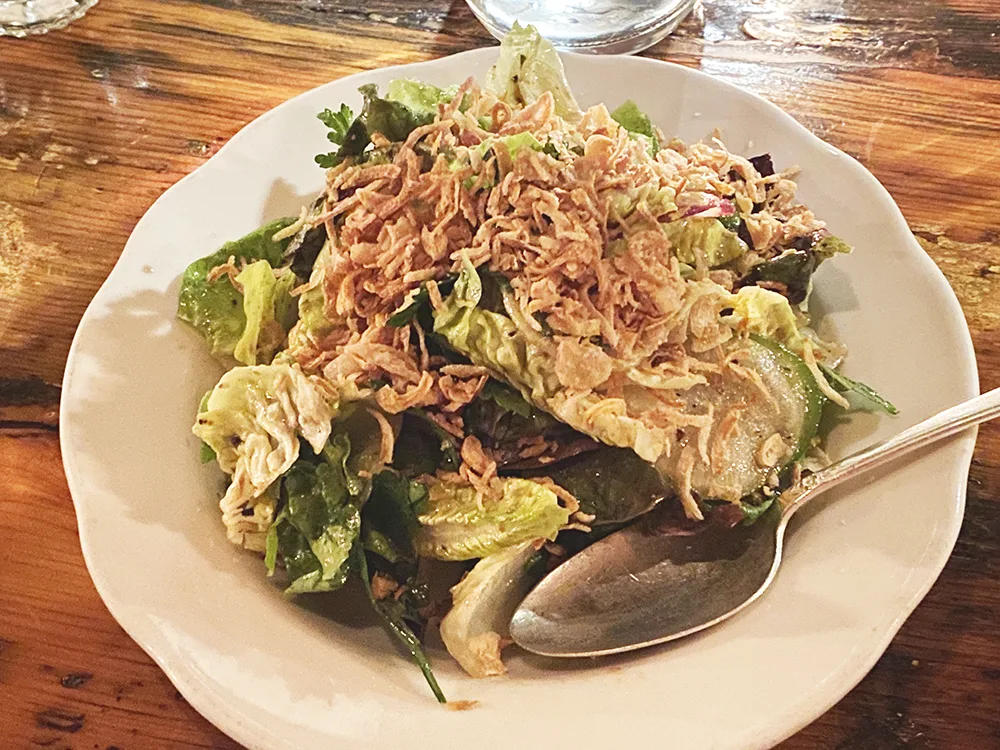
We should have planned on ordering the little gem all along. The salad has been talked about for years, and it’s crunchy and light with crispy lettuce, and particularly refreshing as you anticipate a meaty steak. It was heavy on dressing, but I actually will never fault anyone for that.
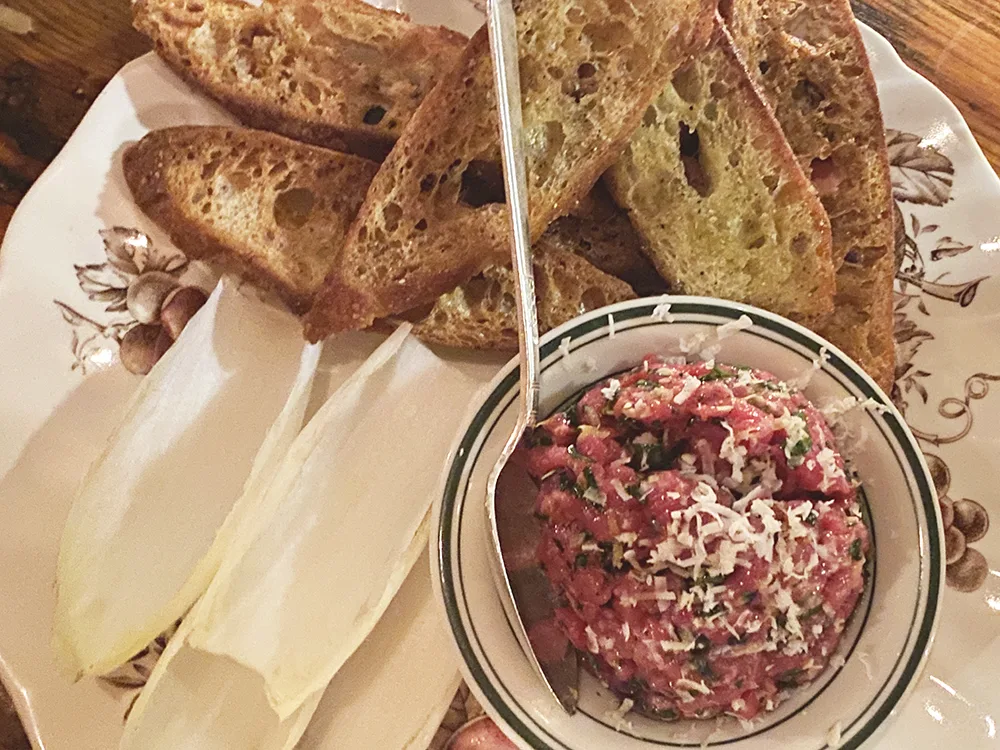
Next up arrived the beef tartare. The bitterness of the endive was a nice counterbalance to the fattiness of the meat. Plus, nobody got sick afterward.
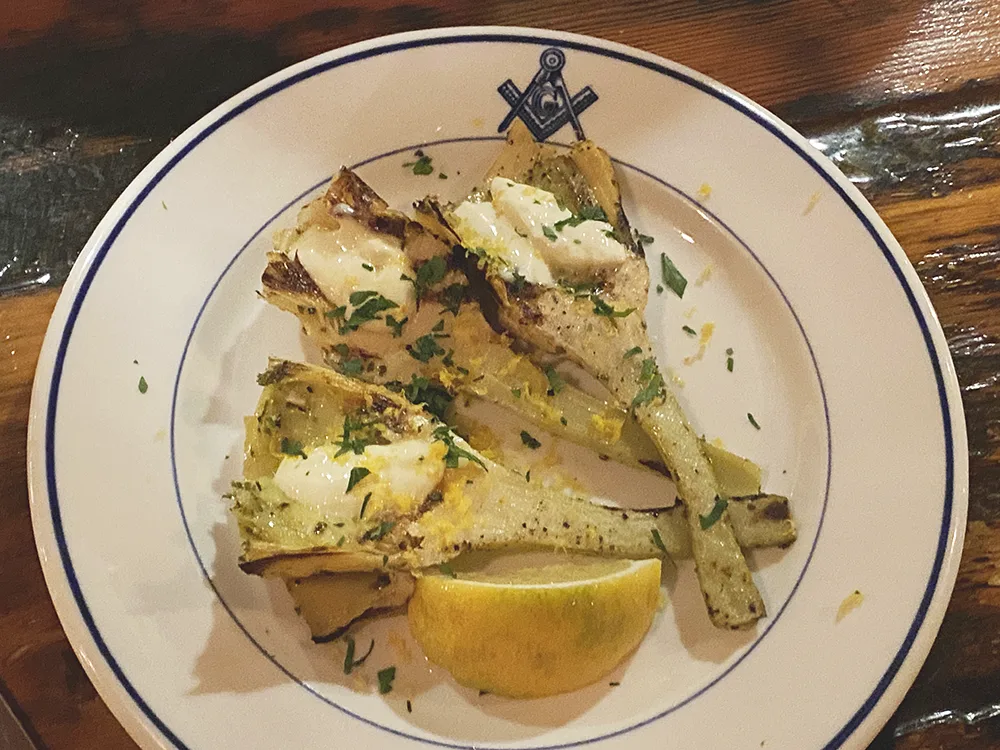
The grilled artichokes were something wonderful. The pat of aioli brought creaminess to the fibrous vegetable. The theme here is using the power of the grill to add flavor to the vegetables. The lemon zest also had a pungency, and this dish does a great job of highlighting the importance of balancing acid and fat and heat.
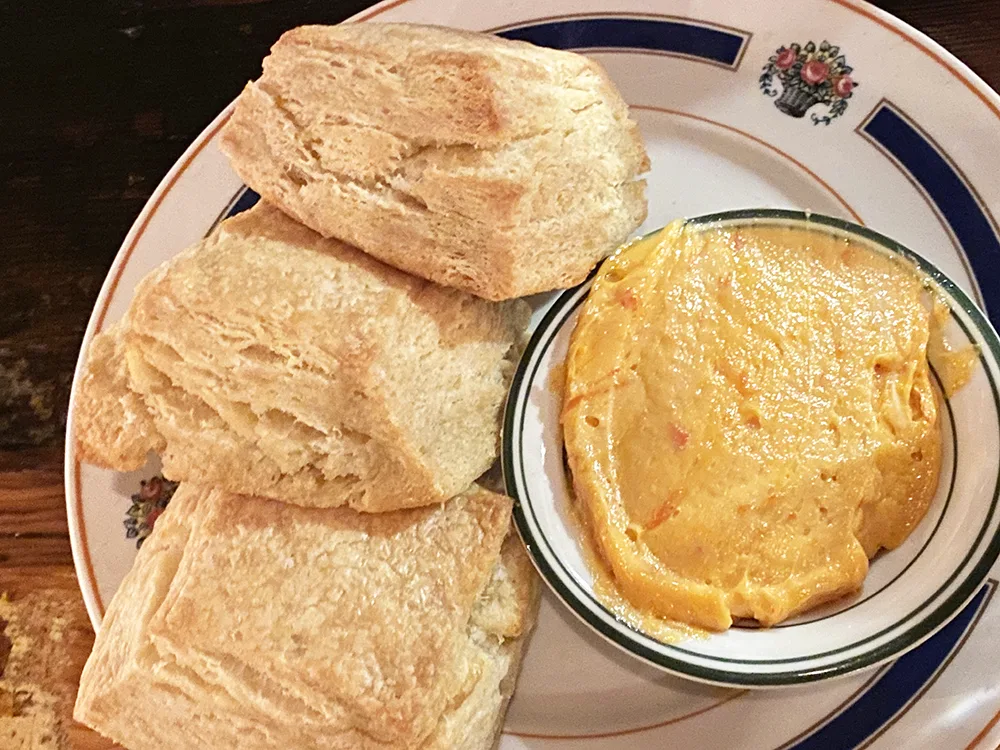
We ordered a special: biscuits with hot pepper butter. Biscuits are risky business in this neck of the woods. The market was supposed to have been cornered by Pies-n-Thighs and Commodore.
But St. Anselm has them beat. Truly the best biscuit west of the BQE, a “good bake” as Paul Hollywood might say.
However, while pepper butter was fine, it could have had more flavor. It fell a bit flat, not really spicy enough or maybe just under seasoned. There was a bit of sweetness from honey in the end, but overall I wanted a stronger flavor from this.
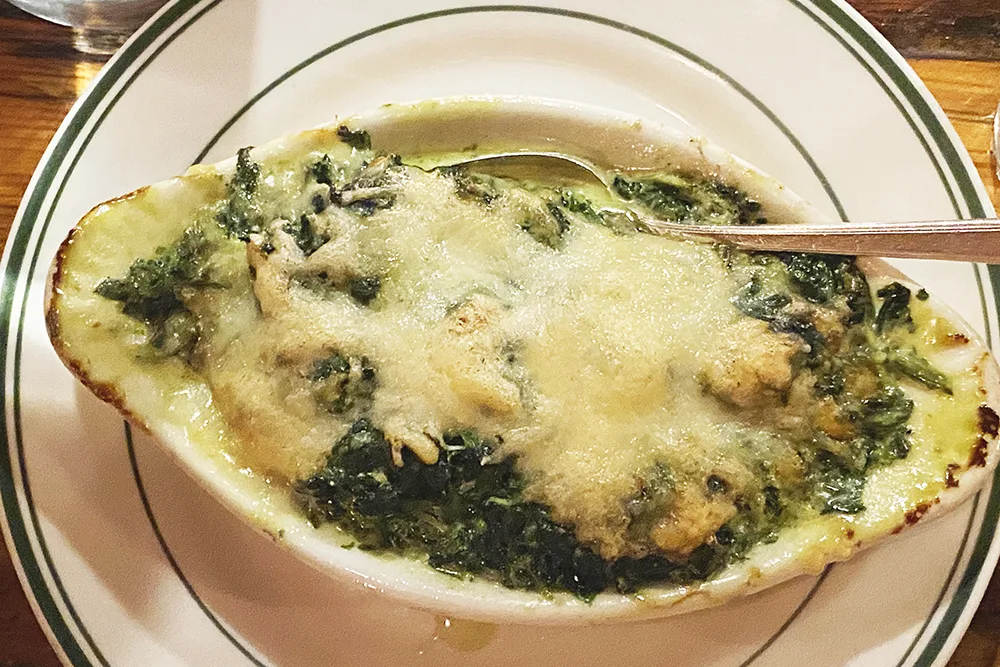
The spinach gratin was a delightful dish. This is where the steakhouse pedigree is really visible. Cream spinach is a staple of the city’s steakhouses, as important as the meat itself. At St. Anselm, the dish is creamy, but topped with additional cheese. Eating the spinach also felt as though there was something of substance to the vegetable, unlike so many steakhouses that serve puree of cream and greens.
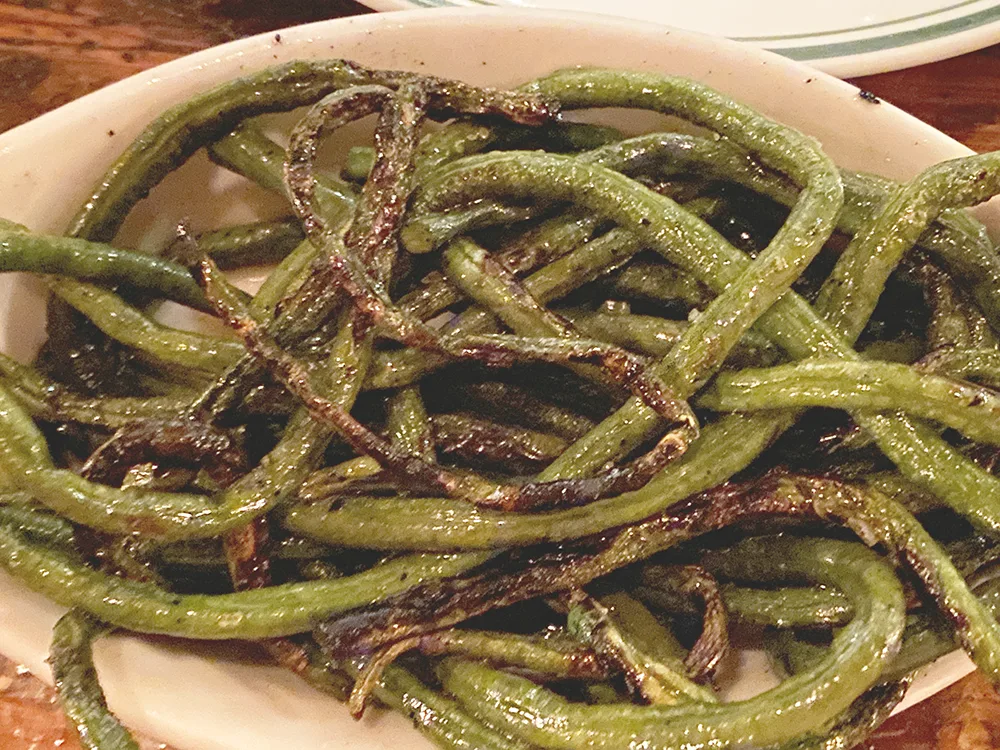
The long beans arrived char grilled and slippery with butter. These are a simple dish and executed well. Alone, they are unremarkable, flavored with butter and grill char. But as a counterbalance to dark red meat, they stand out. There’s good texture and a lightness that helps highlight the meatiness of the meat.
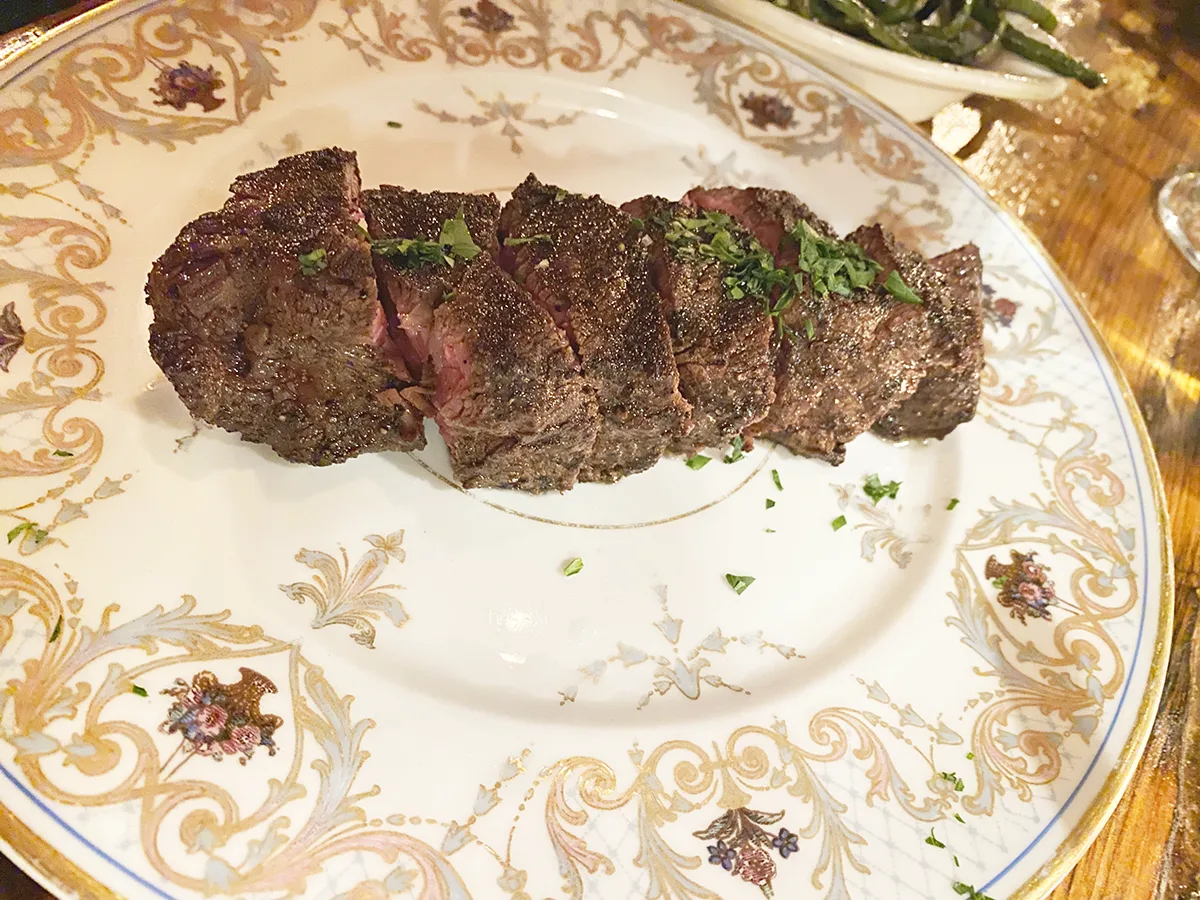
We also ordered the Denver cut. The server suggested medium rare, since there was a bit more marbling in it. But it was, to me, the ideal of a cut of meat: boneless, red, and full of flavor with little fat.
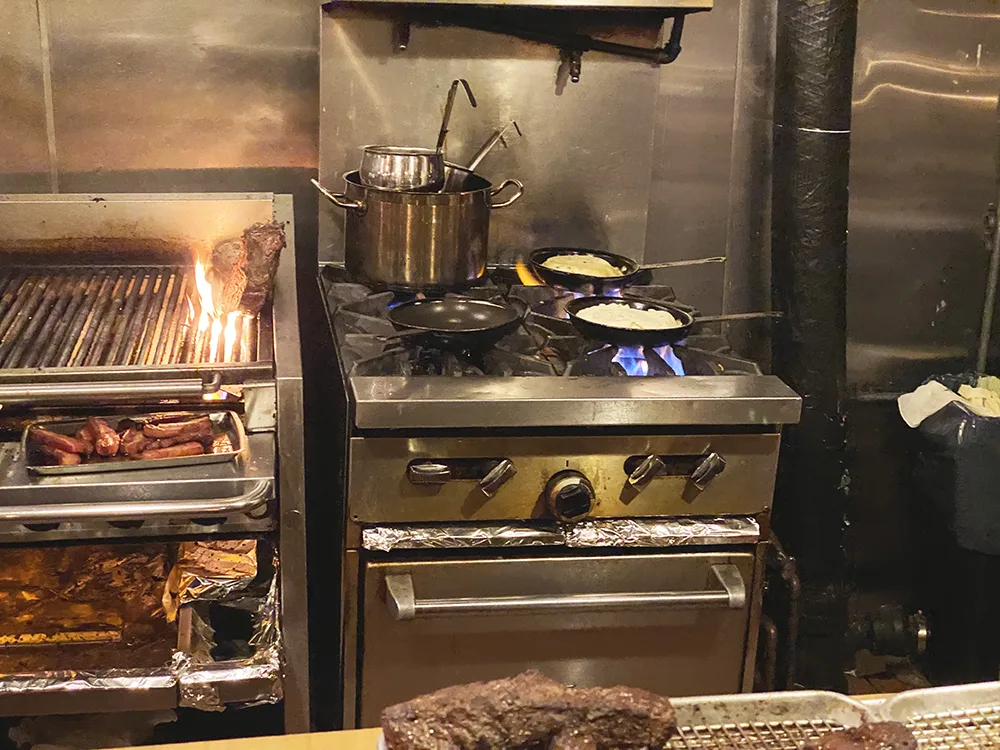
One of the great things about sitting at the bar overlooking the kitchen was watching the chefs cook up the dishes. I wish we had ordered the pan fried mashed potatoes. These are cooked in bacon fat – we chatted with the cook after service ended – and the potatoes develop a thin crust on either side.
On the way out the door, we overheard another couple there celebrating their fifth anniversary. We drunkenly congratulated them as we skipped away into the night.
***
Correction: an earlier version of this essay incorrectly noted that on my first trip, we were seated with a large group of burly men. We were actually turned away, and ended up at Rye, which closed in 2018. Such is the faults of memory.

