Last Call: Saying Goodbye to Fette Sau
By Ian MacAllen on Friday, December 19th, 2025 at 5:38 pm

Fette Sau opened in Williamsburg, Brooklyn in 2007, part of the first wave of modern barbecue joints that would transform the city’s perception of the cuisine. In early December, news leaked that the restaurant was set to close on Sunday, December 21st, 2025.
Before Fette Sau, Southern barbecue was one of the few cuisines that could not be found in a city that collected food styles, fads, and trends. The early “barbecue” available in New York primarily consisted of the chain Dallas BBQ, a fried chicken restaurant, and Virgil’s in Times Square. Blue Smoke had opened in Manhattan, introducing barbecue to formal sit down restaurants, but nothing resembling the modern barbecue experience. But Joe Carroll wanted to embrace the southern style of casual barbecue joints, and he did with Fette Sau.
Fette Sau was the second restaurant from Joe Carroll and Kim Barbour. The team had opened Spuyten Duyvil in 2003 at the corner of Havemeyer Street and Metropolitan Avenue. That menu included rare imported beers and craft beers – both hard to find at the time. Carroll told Maggie Hoffman at Serious Eats in 2018 that he had wanted to focus on wine, but beer was cheaper. Spuyten Duyvil made a name for itself serving up obscure beer long before craft beer culture had taken over.
Meanwhile, Carroll had been making trips south and eating barbecue. He had toured America’s barbecue cities from Texas to the Carolinas with stops in between, and after a few trips south, he told Hoffmann, he had decided the more famous barbecue restaurants were rarely the best, for a variety of reasons from corporatization to the departure of pitmasters.
New York was short on barbecue at the time, but all that was about to change. From 2006 to 2007, Smoke Joint, Hill Country, and Fette Sau opened their doors, altering forever the way New York City ate barbecue.
***
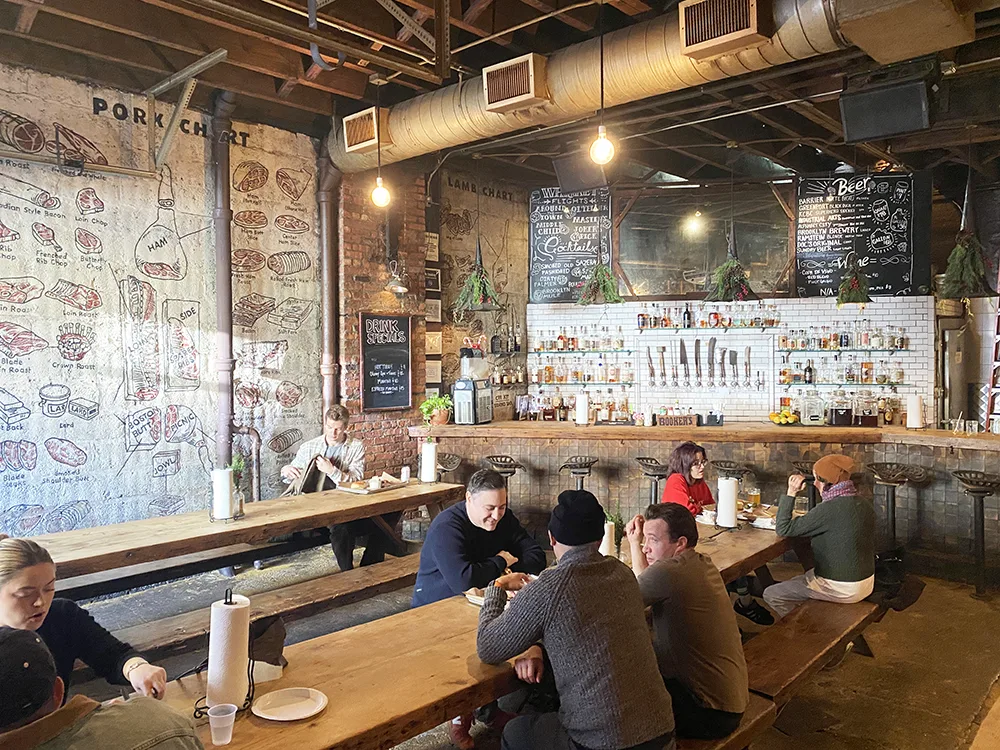
In the roaring aughts, before the Great Recession, Spuyten Duyvil’s unique beer menu and location at the edge of hipster gentrification had created opportunities. A garage across the street opened up, and Carroll and Barbour made their move, launching Fette Sau.
The location had more tables outside in the yard than inside the bar. As with Spuyten Duyvil, the bar focused on local craft beer. And of course, meat. Fette Sau was smoking 200 pounds of meat each day in a gas-and-wood smoker.
When the New York Times recommended it in May of 2007, the primary advice was to visit on a nice day because of the small indoor space. On nice days, the garage doors were opened making the yard and the restaurant feel larger.
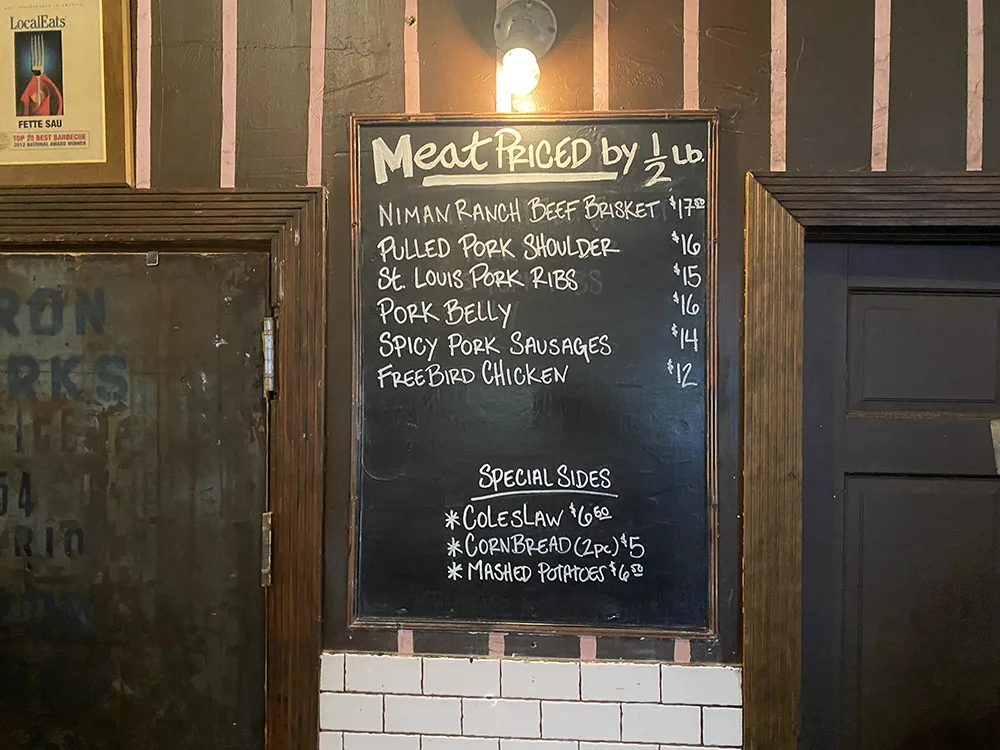
There were long lines when it first opened, even before the writeup in the Times. Personally, I had good luck one evening during the July 4th East River fireworks – most people were staring off at the pretty colors and we had the place to ourselves. But lines often stretched to the street, especially on summer weekend afternoons.
***
Joe Carroll helped transform barbecue in New York City, but also area around Havemeyer Street and Metropolitan Avenue. His third restaurant, St. Anselm, opened across the street from Fette Sau in 2011, as a reimagined steakhouse.
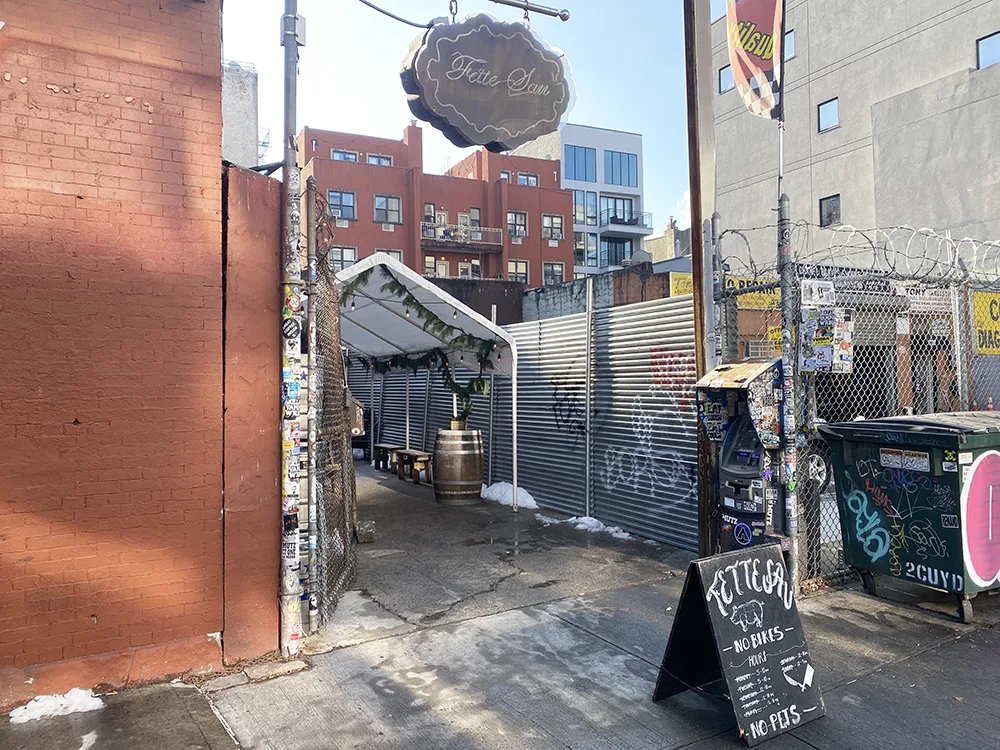
The area changed rapidly over the last two decades since Carroll began building his restaurant empire. The once Puerto Rican and Dominican neighborhood was suddenly home to the city’s hottest restaurants, driving demand for more trendy eateries, stores, and global brands. The changing neighborhood was also driving up commercial rents, and bringing in upscale dining. Not surprising, the surviving pillar in Carroll’s trio is the more upscale St. Anselm.
More barbecue restaurants opened across New York City including John Browns (2011), Mable’s (2011), Might Quinns (2012), Hometown (2013), and Arrogant Swine (2014). Still, Fette Sau kept up the lines on weekends.
In 2012, the original pitmaster, Matt Lang, who had worked at the Pearl Oyster Bar before joining the team, had moved on from the barbecue joint. He was working with Carroll, opening a new project a few blocks down Havemeyer Street, Lake Trout, a short-lived fish sandwich shop. However, Lang eventually moved on to Philadelphia where he opened Zig Zag BBQ in June of 2020.
The pandemic hit Fette Sau hard. Despite the many outdoor tables, the pandemic meant declining tourism and less foot traffic. And in the last five years, the neighborhood Joe Carroll’s restaurants transformed, had changed again, and were now pushing him out. Spuyten Duyvil, his first bar, closed last year, replaced with Rude Mouth, a wine bar.
In early December of this year, journalist Aaron Short, harbinger of restaurant death, was eating in Fette Sau when he learned it was set to close. Short reported the imminent closure in Grub Street, with Carroll blaming the combination of two things: rent of $16,500 a month, and the lack of traffic following the pandemic slowdown.
Carroll blames the freshman class of Williamsburg gentrifiers, the Gen Z kids who have given up drinking and meat and mostly stay at home hearting TikTok videos. That’s a bit ironic, of course, given the changes in the neighborhood heralded by Spuyten Duvil, Fette Sau, St. Anselm, and even the less successful Lake Trout. But its hard to compete in a slowing economy, rapid inflation, and locals who aren’t eating your product.
Twenty-five years ago the corner of Havemeyer and Metropolitan Avenue was the middle of nowhere. But the restaurants from Carroll, and neighbors like Commodore changed the whole perception of the area. Would The Four Horsemen have opened around the corner? Or Leo? Or Bar Madonna? Or L’Industrie?
Carroll became a victim of its own success–or rather, the success that Carroll helped bring to the neighborhood.
***
The city’s barbecue scene has matured. Barbecue is much less exotic now and more part of the overall culinary scene than it was twenty years ago. Fette Sau had remained one of the best, but it was not a place I could eat at every week.
It was at the top of my list when a European friend came to visit looking for genuine American barbecue (he also wanted to play pool in a pool hall, which Williamsburg also had).
When I read the announcement that Fette Sau was closing, I knew I wanted to visit one last time. In my opinion, it was still a top tier choice, competitive with Hometown Bar-b-Que as the best in the city.
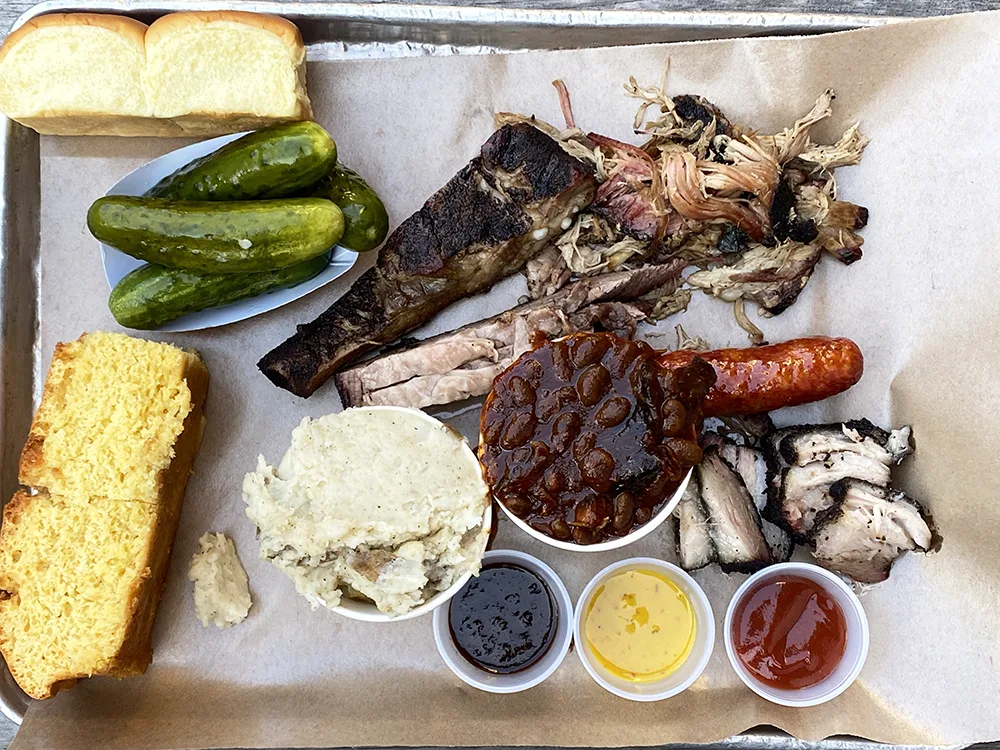
My wife and I had our annual, end-of-year, holiday lunch planned out for Thursday this week. With Fette Sau scheduled to close forever on Sunday afternoon, I was hoping to visit before the best meats ran out.
I was surprised that there was no line when we arrived at a little past 1pm. Even if it was a weekday afternoon, we were in the final days. We decided to order small amounts of each meat. There was a mashed potatoes special, corn bread, and of course the usual burnt ends baked beans.
It was warm enough that we decided to eat outside, though there was probably enough room indoors that we could have grabbed a spot there too. Another pair of patrons was also there reflecting on the closure.
One of the underrated meats from Fette Sau was the sausage. I was happily surprised by its flavor, and the hint of spiciness it had.
The mashed potatoes were spicy with black pepper, and contained the potato skins. Overall I preferred the mashed potatoes to the potato salad that was often on the menu in the summer months.
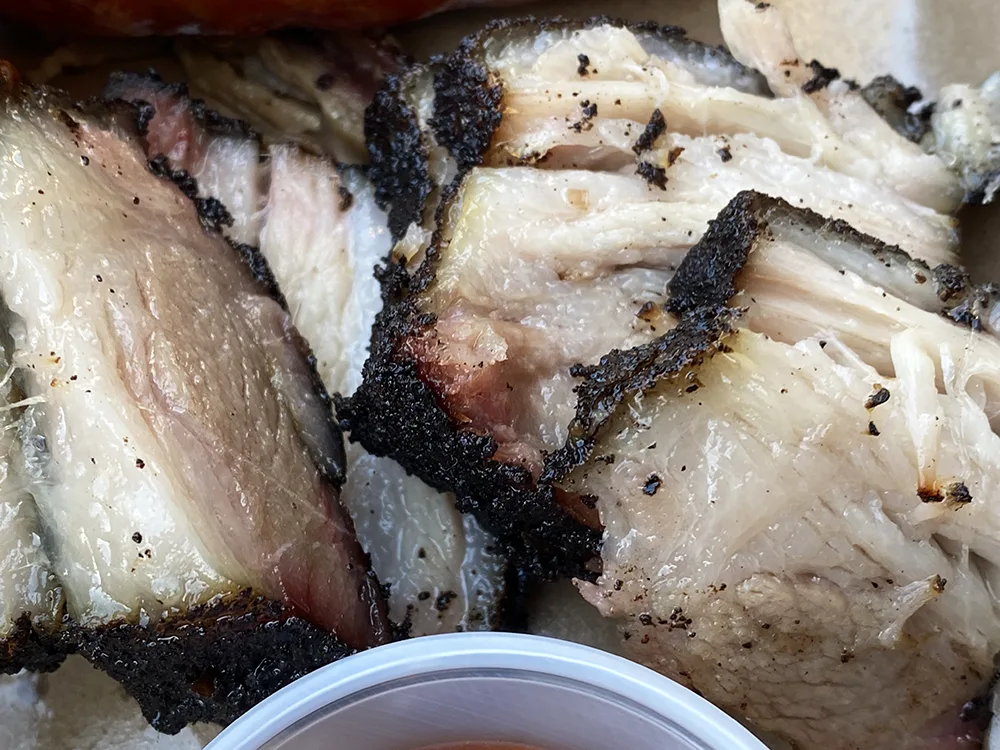
The pork belly was the standout meat, and probably the element that I will miss most from Fette Sau. It was flaky and the fat just melted away. There was no need for sauce on the belly either.
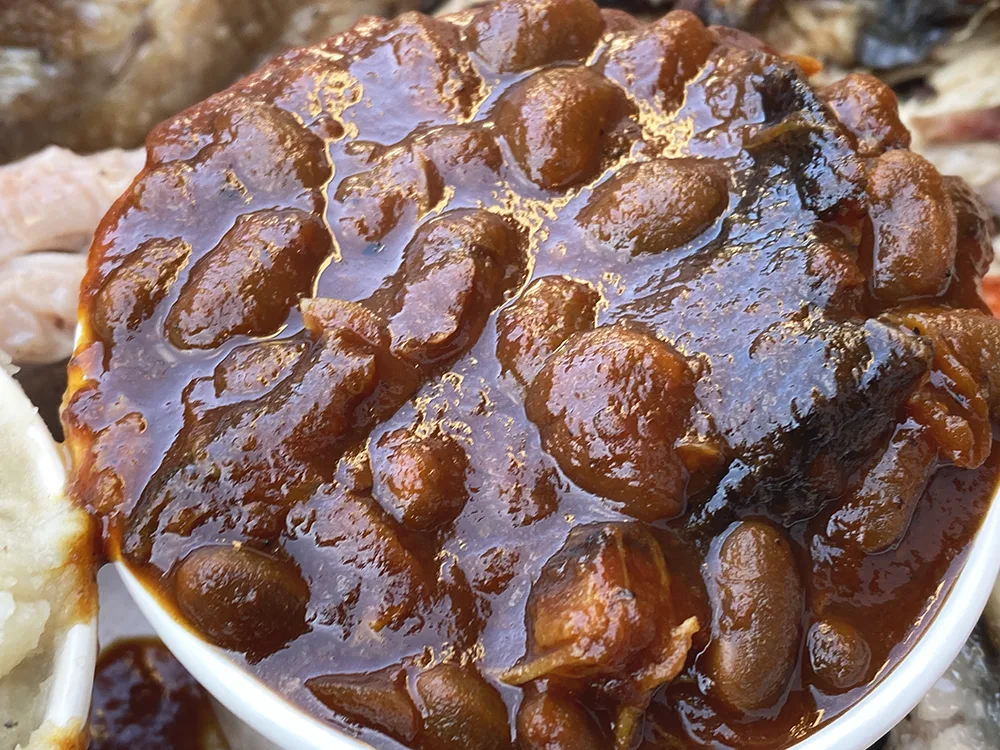
I will also miss the baked beans. The beans have fat chunks of burnt ends floating around in them. But they are slightly sweet and mostly savory. There’s a hint of molasses flavor too.
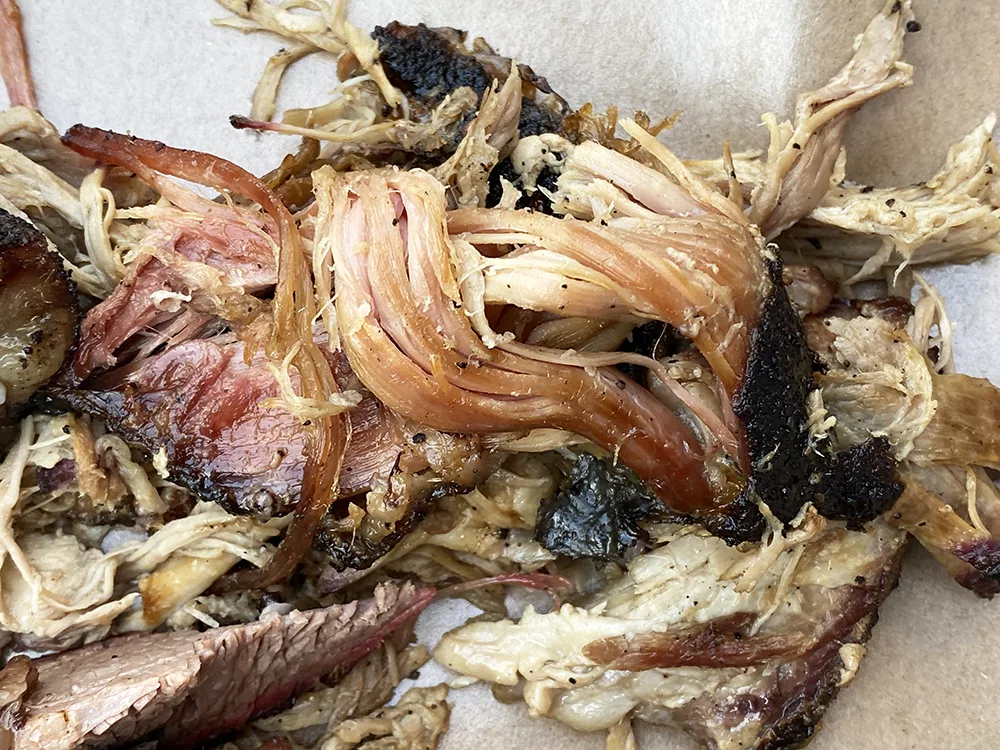
The pulled pork was also excellent. It’s not as greasy as some other pulled pork, and as usual, is a great venue for the barbecue and mustard sauces. My preference was the yellowy mustard sauce and the sweet and spicy barbecue sauce.
I ordered a rib, just because we were at the end times. The rub on the exterior had a lovely flavor with a little bit of dry heat. The meat itself could have been a bit more tender and had a bit more seasoning, but as long as you had a bite with the rub on it, the flavor was fine.
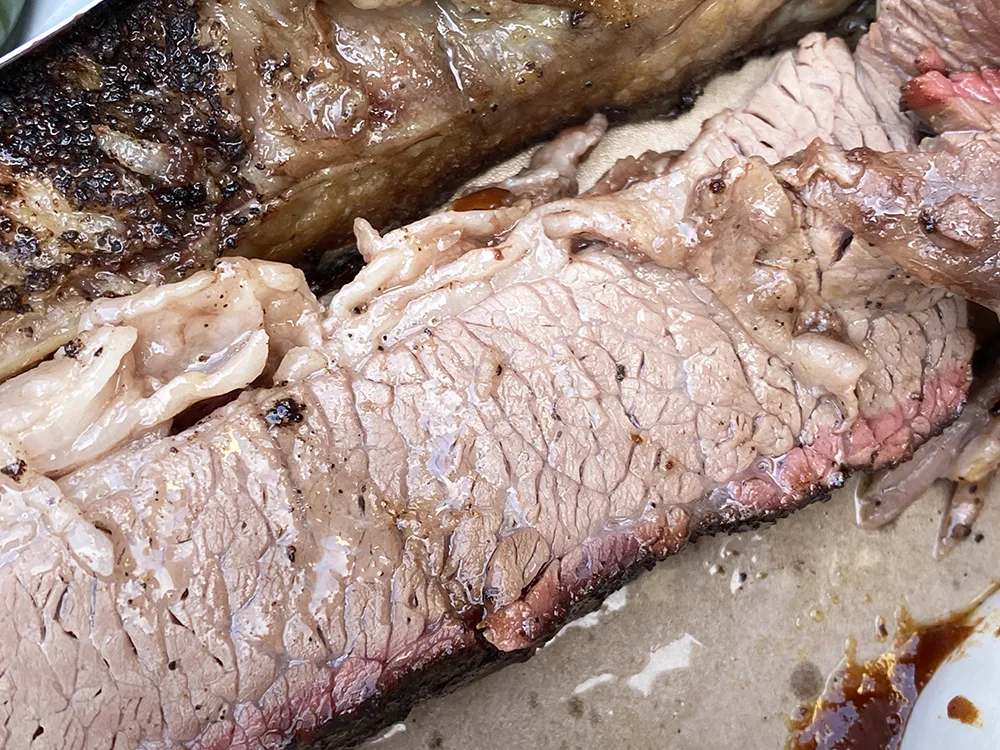
The brisket generally was more to my liking than most other barbecue restaurants with some actual texture to it. It wasn’t greasy either, which can happen sometimes. Overall, a great item to dip in the spicy, smoking, sweet barbecue sauce.
I’m always hesitant to fill up on cornbread at a barbecue restaurant, but my wife likes it, so we had a big chunk of it on the tray. It was actually quite good, not too dry as can happen, and more savory than sweet.
Finally, I’m glad my wife convinced me to order the pickles. I’ve had the pickles, I like the pickles, but I was willing to skip them – and I’m glad we didn’t. They are cool and fresh and balance out the heavy meat.
So often, the final meals at doomed restaurants are shadows of their former selves. My final meal at the Brooklyn location Mission Chinese, for instance, was the perfect example of the staff giving up, the food coming out very mid, and suddenly thinking, “well, I know why they closed.” That wasn’t true at Fette Sau yesterday. The food was delicious and tasty, and just as I had remembered it.
If there is a criticism to be made, it’s that Fette Sau was just as I remembered it. What had changed? What had evolved? Restaurants can’t exist in a vacuum. Even the restaurants that survive a century do so through an evolution of their food. They may preserve a recipe or a few key dishes, but the menu as a whole must continue to grow and adapt. And while I love the fact that I could, even in the final days of Fette Sau, have a very similar meal to the one I had in 2022, or the one I had in 2014, or in 2010, the world has changed, the city has changed, the neighborhood has changed.
As much as I will miss Fette Sau, perhaps the time had come to close. The original pitmaster had left, one of Carroll’s concerns with popular southern joints. And perhaps its better to close when the meat was still delicious than to have a corporate overlord. And for anyone who might miss the final weekend, there’s always Fette Sau in Philly.
***
If you can’t get to Williamsburg before Fette Sau closes and don’t want to visit Philly, Joe Carroll also published two barbecue and grilling recipe collections, Feeding The Fire and The Artisanal Kitchen: Barbecue Rules.

